
WELCOME BONUS 300%
UP TO €2000 + 100
FREE SPINS
UP TO €2000 + 100
FREE SPINS
Home → Blackjack
Blackjack at Irwin Casino: Variants, Rules and Payouts
Chose Wrong Table for 5 EUR Bankroll
The Blackjack 6 Decks variant features a house edge of 0.46% with a 3:2 payout ratio, while the standard 6:5 version carries a significantly higher edge of 1.85%. The 6:5 payout structure adds exactly 1.39 percentage points to the casino advantage compared to the favorable 3:2 rule set. This discrepancy means that a winning $10 bet yields only $12 instead of the expected $15 under the liberal terms.
Players selecting the wrong table configuration face a fourfold increase in the theoretical loss rate due to the altered payout structure alone. The 6:5 blackjack option reduces the return-to-player percentage to 98.15%, which is substantially lower than the 99.54% offered by the standard game. Choosing the inferior variant effectively drains a bankroll much faster than any other single rule modification available at the venue.
The financial impact becomes critical when wagering on tables that do not contribute fully to bonus requirements, compounding the statistical disadvantage. A player committing to the 6:5 table sacrifices both immediate payout value and long-term retention efficiency simultaneously. Selecting the correct variant is essential for preserving capital against the inherent mathematical edge held by the operator.
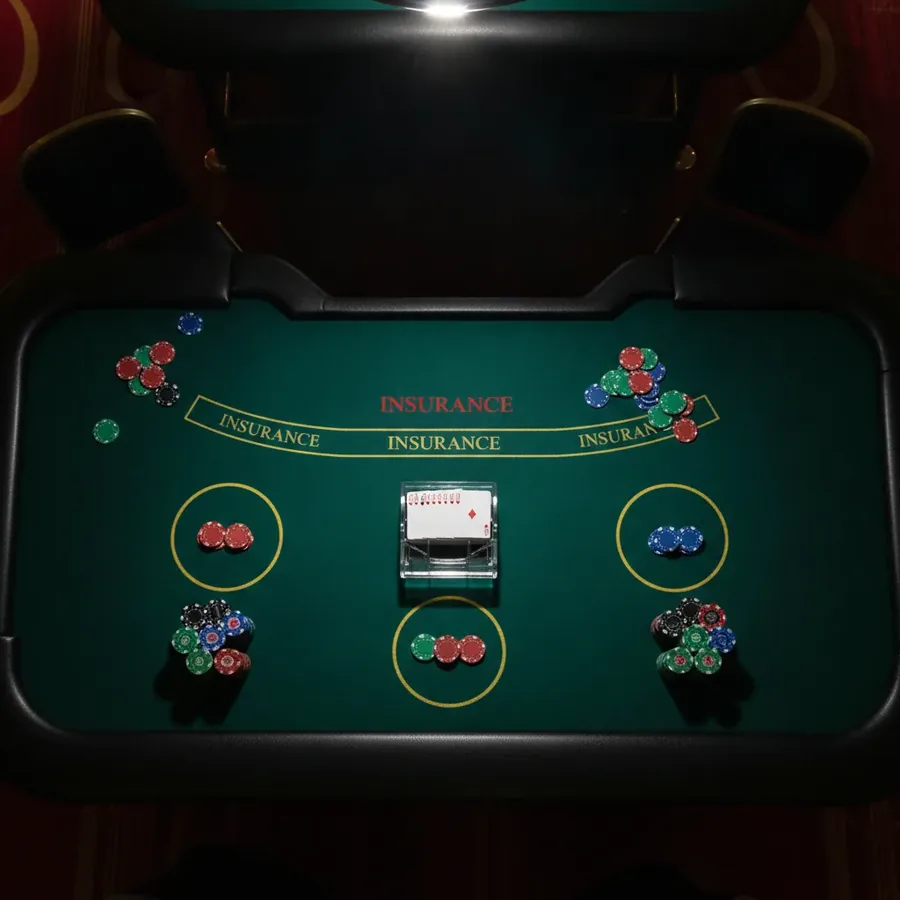
What doesn't count as Blackjack after Split?
The Liberal Vegas Strip ruleset allows doubling after split (DAS), enabling players to increase their stake on additional hands created from an initial pair. This specific rule improvement enhances the return-to-player percentage by approximately 0.14 percentage points compared to games restricting double-down actions. DAS is permitted on any two-card hand, providing flexibility that standard restrictions often deny to casual participants.
In contrast, splitting Aces typically restricts players to receiving only one additional card per new hand, limiting strategic depth and potential profit maximization. While resplitting Aces improves the RTP by about 0.08 percentage points, the single-card limitation remains a common constraint across most variations. This restriction prevents the exponential growth of bets that occurs when multiple cards can be drawn to split pairs like eights or fours.
The distinction between these mechanics directly influences the overall house edge, with liberal rules offering a superior 0.28% margin versus standard offerings. Players utilizing optimal strategy on tables with DAS and late surrender benefit from the lowest possible disadvantage of 0.28%. Understanding these mechanical limits helps manage expectations regarding potential returns during extended play sessions.
Blackjack Contributes Only 10 Percent to Wagering
Table games contribute merely 10 percent toward the fulfillment of the 300% welcome bonus up to €2,000, whereas slots contribute 100 percent to the same requirement. This disparity forces players to wager ten times more on blackjack to achieve the same progress toward clearing the bonus funds compared to slot machine gameplay. The low contribution rate significantly extends the time required to convert promotional credits into withdrawable cash.
For example, generating €1,000 in turnover on slots counts fully toward the wagering target, while the identical amount on blackjack only counts as €100. This mathematical penalty makes clearing the bonus through table games highly inefficient unless the player possesses an exceptional bankroll size. The 10% contribution factor effectively multiplies the actual volume of bets needed to satisfy the promoter's conditions.
The combination of a 10% game contribution and a 0.46% house edge creates a formidable barrier for converting free spins and deposit matches into real money. Players relying on blackjack to clear the €2,000 maximum bonus must generate substantial turnover just to offset the reduced credit accumulation rate. Strategic allocation of funds between high-contribution slots and low-contribution tables becomes a necessity rather than a choice.
When can you increase your bet?
Lightning Blackjack from Evolution allows unlimited players to participate with bets ranging from 1 EUR to 2,500 EUR, featuring multipliers up to 25x on winning hands. Quantum Blackjack Plus from Playtech supports stakes between 1 EUR and 5,000 EUR, offering multipliers up to 1,000x on three-card combinations totaling 21 points. These live dealer variants expand betting opportunities beyond traditional fixed-limit structures found in standard digital tables.
The entry threshold for Lightning Blackjack starts at a modest 1 EUR, making it accessible for small bankrolls, while the upper limit reaches 2,500 EUR for high rollers. Quantum Blackjack Plus extends the maximum stake to 5,000 EUR, catering to players seeking larger exposure to volatile multiplier events. Both games maintain high RTP figures of 99.56% and 99.57% respectively when played with optimal strategy adjustments.
Bet increases are governed by the specific limits imposed by each provider, with Evolution capping hands at 2,500 EUR and Playtech allowing up to 5,000 EUR. Players must verify the current table limits before escalating wagers, as exceeding the maximum stake results in voided bets or automatic downgrades. The availability of high-limit seats depends on real-time seat occupancy and the total number of active participants at the virtual table.
Which hands are excluded from Surrender?
Late Surrender allows players to forfeit half their bet after the dealer checks for blackjack, improving the return-to-player percentage by approximately 0.08 percentage points. This rule applies only if the dealer does not hold an initial blackjack, meaning hands are evaluated post-dealer verification rather than pre-deal. Early Surrender, which offers greater value up to -0.6 percentage points, remains extremely rare and is generally unavailable in standard online environments.
The insurance side bet, paying 2:1 when the dealer shows an Ace, carries a severe house edge of 7.47% and should be avoided by basic strategy adherents. Insurance decisions are independent of surrender options, as they represent separate wagers placed before the main hand resolution. Combining insurance with surrender strategies does not mitigate the negative expectation associated with the insurance bet itself.
Hands totaling hard 16 against a dealer 10 or 9 are prime candidates for surrender, provided the rule permits action after the dealer peek. Excluded scenarios include any hand where the dealer reveals a natural blackjack immediately, rendering the surrender option void for all players. Players must distinguish between early and late surrender timing to accurately assess the mathematical value of abandoning a losing position.
Blackjack variants at a glance
| Variant | Payout | House edge | Rule | Bet range |
|---|---|---|---|---|
| Blackjack Surrender (Late Surrender) – Regel-Effekt | n.a. (Regel-Modifikator) | −0.08 Prozentpunkte | Spieler gibt Hand nach Dealer-Blackjack-Prüfung auf, verliert die Hälfte des Einsatzes. Verbessert RTP um ca. 0.08 Prozentpunkte. Early Surrender ist wesentlich wertvoller (bis −0.6 Prozentpunkte), aber extrem selten. | Rückzahlung 50% des Einsatzes |
| Blackjack Ein Deck, klassische Regeln, 3:2 | 99.85% | 0.15% | Weniger Decks = niedrigerer Vorteil; ein Deck gibt ca. −0.48 Prozentpunkte gegenüber 8 Decks. Oft durch 6:5 Auszahlung kompensiert. | Blackjack 3:2, Gewinn 1:1 |
| Blackjack Insurance / Versicherung (6–8 Decks) | 92.53% | 7.47% | Separate Nebenwette bis 50% der Hauptwette, wenn der Dealer ein Ass hat. Basisstrategie schreibt IMMER Ablehnung vor (außer Karten zählen bei True Count ≥ +3). Bei einem Deck Vorteil ≈ 5.88% | Insurance 2:1 |
| Blackjack 6 Decks, S17, DAS, DOA, Auszahlung 3:2, Basisstrategie | 99.54% | 0.46% | Dealer steht auf Soft 17; Verdopplung auf jeder Zweierkarte; Verdopplung nach Split erlaubt; keine Aufgabe. Basisstrategie ist für diesen Wert zwingend | Blackjack 3:2, normaler Gewinn 1:1, Insurance 2:1 |
| Blackjack Split / Double / H17 – Regel-Effekte | n.a. (Regel-Modifikatoren) | H17 +0.22 Prozentpunkte; RSA −0.08 Prozentpunkte; DAS −0.14 Prozentpunkte | Dealer Hits Soft 17 verschlechtert RTP um 0.22 Prozentpunkte; Resplit Aces verbessert um 0.08 Prozentpunkte; Double After Split verbessert um ca. 0.14 Prozentpunkte; 6 Decks statt 8 – ca. 0.02 Prozentpunkte. | Double – Einsatz ×2 mit einer Karte; Split – bis 4 Hände; Ass-Split meist mit einer Karte. |
| Blackjack Liberal Vegas Strip (liberale Regeln, 3:2) | 99.72% | 0.28% | Günstigste Regelkombination: S17 + DAS + Resplit + Late Surrender. Standardabweichung 1,15 | Blackjack 3:2, Gewinn 1:1 |
Clicked Too Late: Hand Is Automatically Held
The Blackjack Surrender rule allows a player to forfeit half the stake after the dealer checks for blackjack, which improves the RTP by approximately 0.08 percentage points compared to a standard hand without this option. This late surrender mechanism is less valuable than early surrender, which can reduce the house edge by up to 0.6 percent, but it remains a standard feature in many digital tables. The maximum return on this specific bet is capped at a 50% refund of the original wager placed on the initial two cards.
Standard Blackjack 6 Decks with S17 and DAS yields a base house edge of 0.46 percent, whereas the absence of surrender rules would increase this advantage for the casino significantly. A single-deck game with classic rules offers a lower house edge of 0.15 percent, primarily due to fewer decks reducing the statistical variance against the player. Implementing surrender in these low-edge games further optimizes the theoretical return, making the 0.46 percent edge on multi-deck games more manageable for disciplined players.
Players must adhere strictly to basic strategy to realize the full benefit of the 0.08 percent improvement from surrender, as deviations often negate the mathematical advantage gained. If a player stands on a hard 16 against a dealer ten, they risk losing the entire stake rather than mitigating it through the surrender option. The payout structure remains unchanged at 1:1 for normal wins, ensuring that the surrender mechanic functions purely as a loss-mitigation tool rather than a profit generator.
Splitting Eights vs Standing on 16
Blackjack Split rules permit dividing pairs into up to four separate hands, allowing for Double After Split (DAS) which improves the RTP by approximately 0.14 percentage points relative to non-DAS variants. Splitting eights is mathematically superior to standing on a hard 16, as the latter carries a high probability of busting or losing to a dealer's strong upcard. The ability to double down on each split hand maximizes value when the dealer shows a weak card like a five or six.
Resplitting Aces provides an additional 0.08 percentage point improvement to the RTP, though most casinos limit this to receiving only one additional card per ace. In contrast, splitting tens results in two strong hands of twenty, which are statistically difficult to beat but do not offer the same recovery potential as splitting eights. The house edge for the standard 6-deck game sits at 0.46 percent, meaning every strategic decision, including splitting, directly impacts the long-term financial outcome.
A Liberal Vegas Strip variant reduces the house edge to just 0.28 percent by combining S17, DAS, resplitting, and late surrender, making splitting decisions even more critical. Standing on 16 against a dealer seven or higher typically leads to a loss, whereas splitting eights transforms a losing hand into two potentially winning ones. The payout for a natural blackjack remains 3:2, ensuring that successful splits do not alter the core reward structure of the game.
Insurance bets, which pay 2:1 if the dealer has blackjack, should generally be avoided as they carry a house edge of 7.47 percent, severely undermining any gains from optimal splitting strategies. Only card counters with a true count of +3 or higher might find insurance mathematically favorable, a scenario rarely encountered in standard online play. The standard deviation of 1.15 in liberal variants indicates moderate volatility, requiring players to manage their bankroll carefully during streaks of splits.
Bonus 100 EUR with 10 percent credit
Table games contribute only 10 percent toward the bonus turnover requirement, meaning a 100 EUR deposit generates a 300 EUR bonus where table wagers accumulate slowly. Slots contribute 100 percent, so wagering 1,000 EUR on slots clears the equivalent amount of turnover compared to 10,000 EUR on blackjack tables. This disparity forces players to choose between playing their preferred games or clearing the bonus efficiently through high-contribution slot titles.
The 300% welcome bonus up to 2,000 EUR requires significant turnover to unlock withdrawals, especially when restricted to low-contribution table games. For instance, wagering 500 EUR on blackjack adds only 50 EUR to the required turnover total, drastically extending the time needed to meet conditions. Players seeking to utilize the 0.46 percent house edge on blackjack must account for this reduced contribution rate when calculating effective bankroll erosion.
Comparing this to the 99.54 percent RTP of the standard blackjack game, the 10 percent contribution effectively increases the cost of clearing the bonus by ninefold relative to slots. A player wagering 10,000 EUR on blackjack faces a theoretical loss of 46 EUR based on the house edge, yet only satisfies 10 percent of the turnover obligation. This structure heavily incentivizes slot play, where the lower RTP is offset by the direct 1:1 progress toward bonus release.
Insurance bets on blackjack, paying 2:1, do not bypass the 10 percent contribution rule, meaning even high-payout side bets remain inefficient for bonus clearance. The 7.47 percent house edge on insurance further penalizes players who attempt to use these bets to clear requirements, as losses accumulate rapidly without proportional progress. Optimal strategy involves avoiding complex table interactions and focusing on simple slot spins to maximize turnover efficiency.
Unlimited seats via a split dealer hand
Lightning Blackjack by Evolution supports unlimited players at a single table, featuring lightning multipliers up to 25x on winning hands that significantly boost payouts beyond the standard 3:2 blackjack reward. The base RTP of 99.56 percent includes these multiplier effects, offering a slightly better return than the standard 6-deck game at 99.54 percent. This format allows multiple participants to benefit from the same dealer hand, creating a shared experience without compromising individual betting limits.
Quantum Blackjack Plus by Playtech also accommodates unlimited seats while introducing quantum multipliers up to 1,000x on three-card combinations totaling 21 points. With an RTP of 99.57 percent under optimal strategy, this variant offers the highest theoretical return among the listed live options, surpassing both standard and lightning versions. The inclusion of such high multipliers compensates for the inherent house edge, providing occasional massive payouts that offset the 0.43 percent disadvantage.
Blackjack Party by Evolution focuses on atmosphere with two moderators, maintaining a standard betting range of 1.00 to 1,000 EUR for all seated players. Unlike the multiplier-heavy variants, this table relies on traditional gameplay mechanics, contributing to the 10 percent bonus turnover requirement for table games. The unlimited seating model ensures that high rollers can join without waiting for available spots, maintaining continuous flow regardless of player volume.
The split dealer hand mechanism in these live games does not alter the fundamental house edge calculations, which remain anchored to the underlying deck composition and rules. Players must still adhere to basic strategy to minimize the impact of the 0.46 percent edge found in standard games, as live dealers cannot be influenced by split decisions. The 25x multiplier cap in Lightning Blackjack represents the maximum potential upside, limiting the variance compared to the 1,000x potential in Quantum variants.
How much time is left for the decision?
The Blackjack Surrender rule requires a timely decision before the dealer completes their hand, specifically after checking for blackjack but before other actions proceed. Failure to surrender within the allotted window results in the hand being played out, exposing the player to the full risk of loss rather than the 50 percent penalty. This time constraint is critical for maximizing the 0.08 percent RTP improvement offered by the late surrender option.
Standard blackjack decisions, such as doubling down or splitting, must be executed quickly to maintain game pace, especially in live dealer formats like Lightning Blackjack with its rapid multiplier cycles. The 99.56 percent RTP of this variant depends on players acting promptly to capitalize on lightning multipliers applied to winning hands. Delays in decision-making can cause players to miss opportunities for enhanced payouts, effectively increasing the real-time house edge.
Insurance bets, which pay 2:1, present an additional decision point that must be resolved immediately upon the dealer showing an ace, adding another layer of time pressure. The 7.47 percent house edge on insurance makes this a poor choice for most players, yet the urgency of the decision prevents hasty acceptance of negative-value bets. Clear understanding of these time-sensitive mechanics is essential for optimizing the overall gaming session duration and financial outcome.
Live tables like Quantum Blackjack Plus require swift action to trigger quantum multipliers on three-card 21s, with an RTP of 99.57 percent contingent on optimal and timely strategy execution. The 1,000x multiplier potential is only accessible if players make correct decisions within the strict time limits imposed by the live stream interface. Missed windows result in standard payouts, highlighting the importance of speed in conjunction with accuracy to achieve the highest theoretical returns.
What a Natural Blackjack Practically Pays Out
A natural blackjack payout ratio of 3:2 transforms a 100 EUR stake into a 150 EUR return, preserving the game's theoretical return to player at 99.85% for single-deck variants with classic rules. This standard contrasts sharply with the inferior 6:5 payout structure found in many other tables, which reduces the RTP to 98.15% and significantly increases the house edge. The difference results in a direct financial loss of 30 EUR per 100 EUR bet when opting for the lower paying variant, making the 3:2 rule essential for value. Players must verify the payout table before sitting down to avoid this hidden cost.
Stand-on-17 Rule and Its Meaning for Players
The Stand-on-17 (S17) rule requires dealers to stand on soft seventeen, reducing the house edge by approximately 0.14 percentage points compared to hitting soft seventeen variants. This favorable condition appears in high-RTP games like Liberal Vegas Strip, where the combined effect with double-after-split and resplitting lowers the house advantage to just 0.28%. Conversely, Hit-Soft-17 (H17) rules increase the casino's edge by 0.22 percentage points, making those tables less profitable for strategic players over extended sessions. Recognizing this rule variation allows players to select tables that offer better mathematical expectations for their bankroll management.
Statistics display saves the last 100 rounds
Lightning Blackjack by Evolution offers betting limits ranging from 1 to 2,500 EUR, accommodating both casual players and high rollers within a single live table format. The game features lightning multipliers up to 25x on winning hands, adding significant volatility to the standard 99.56% RTP associated with this popular live dealer variant. These multipliers apply randomly to specific cards, creating moments of heightened excitement while maintaining the underlying mathematical structure of traditional blackjack. Players should note that such features do not alter the fundamental house edge but rather distribute variance across different hand outcomes.
Double Down vs Simple Hit on 11
Doubling down on hard eleven allows players to double their initial stake in exchange for receiving exactly one additional card, optimizing expected value in favorable situations. This action reduces the house edge by approximately 0.14 percentage points when permitted after splitting, highlighting its importance in comprehensive basic strategy charts. Hitting instead of doubling leaves potential earnings on the table, as the probability of drawing a ten-value card exceeds fifty percent in standard decks. Utilizing this option correctly is essential for minimizing the casino's mathematical advantage over the long term.
Live Table vs RNG Table: Speed and Limits
RNG blackjack games typically operate at a faster pace than live dealer tables, allowing players to complete more hands per hour due to automated dealing processes. Single-deck variants with 3:2 payouts offer the highest RTP of 99.85%, appealing to efficiency-focused players who prioritize speed and optimal mathematical conditions. However, these games often lack the social interaction present in live formats, relying solely on interface design to maintain engagement without human dealers. The trade-off between speed and social experience defines the primary distinction between digital and live blackjack offerings in online casinos.
Contact
Live - online chat
Banking









Providers












Irwin Casino 2026